Variations in Computer Monitors
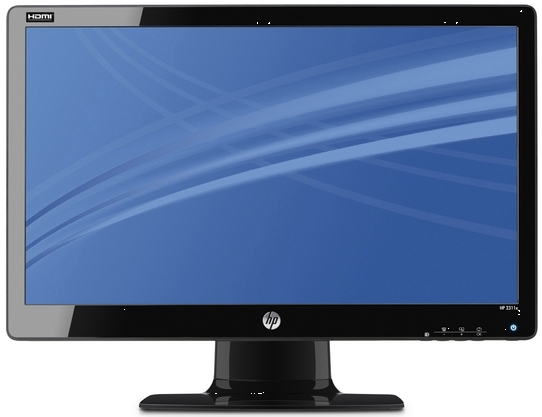
Consisting of a circuitry, an enclosure and a display device, a display or a monitor is the computer’s visual electronic display. The older monitors used cathode ray tubes but presently the modern monitors are basically a liquid crystal display of a thin film transistor liquid.
Different kinds of computer monitors
Monitors are a vital part of a computer without which the system cannot work, since it is the standard output device. The output information is showed via the monitor. The market for computer monitors are continues to evolve with vast improvements in image technologies manufacturing a huge collection of screen sizes at different price points. The LCD and the LED are two most common technologies used today and now with the invention of UHD (ultra high definition) monitors, the image quality has improved by leaps and bounds. Touch screens are also becoming more and more common and on the whole these advanced models are within the reach of a large class of consumers due to competition amongst high quality manufacturers.
CRT
CRT is short form of cathode ray tube and is the older model and is mostly found in a PC for sale or exchange of a modern version. Comparatively they are heavier, occupy more space and power consumption with low resolution and very high radiation.
LCD
Liquid Crystal Display is LCD and its very light, occupy minimal space, only 12v power consumption, low radiation and extremely high resolution. To provide excellent image quality, contrast levels and resolution compact and fluorescent tubes are used to make brighter the image on the screen, by the LCD monitors. LCD monitors make a good choice when video conferencing or presentations and school home-works. In comparison to LED, these monitors might be on the heavier due to the fluorescent tubes but are surely budget friendly. The 24 inches range from $110-$180 depending upon the brand.
LED
LED is short for Light Emitting Diode. This the latest and the most trendy monitor and fundamentally there are no differences between LCD and LED monitors but presently the general preference is LED because of very superior resolution and picture quality. In a LED monitor, the fluorescent tubes of LCDs are replaced by improved backlighting technology for clearer images. The light emitting diodes are arranged in such a way that they are able to produce lighter, thinner and energy efficient monitors. Movies and video games are a better option here due to better colour saturation and contrast ratios. Though prices have come down it is still little more than LCDs.
OLED
With an improved LED technology OLED works without a backlight and therefore the monitors are more energy efficient and thinner and produces vivid colours. But the manufacturing cost is high and is used more for HDTVs and will probably enter the computer monitor market too.
Ultra high definition monitors
UHD take the LED technology further and adds up to 2 million pixels in full HD and 8 million in UHD. With 4K technology, sharpness and image detailing is many rungs higher. But the price is still beyond the realm of many.
Touch screen
Touch screen monitors are sleeker and are accurate with touch. The main advantage here is that it can be used as and when required, otherwise the mouse and keyboard works fine too. This monitor has gained popularity amongst the young generation.
For more details, please visit at https://www.facebook.com/panelreview2014
What is a Flat Panel Monitor?
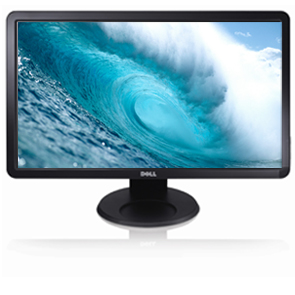
A flat panel monitor, sometimes abbreviated as FPD, can refer to either a computer or television monitor that does not use cathode ray tube (CRT) technology, but commonly LCD (Liquid Crystal Display) or plasma technology. This allows the monitor to have a thin screen display, compared to the traditional one, which is how the monitor gets its name. To be exact, it is usually less than 10 centimetres (3.9 in) thick. Because of its light weight, small footprint, clarity and digital technology, it has become the new standard monitor of choice.
Flat panel displays encompass a growing number of electronic visual display technologies. However, most of the modern flat-panel displays use LCD technologies. Most LCD screens are back-lit to make them easier to read in bright environments. They are thin and light. They provide better linearity and higher resolution.
Prior to the flat panel monitor, the CRT monitor was standard. These monitors are easily recognizable by the bulging back or picture tube. Vacuum tube monitors are not only bulky and heavy, also environmentally unfriendly and emit more radiation than LCD or plasma monitors. The first production of flat panel displays was carried out in the early 1950s and were produced only in limited numbers till 1958. Gradually, after several failed attempts, it was finally commercialized.
Flat panel displays can be divided into two general display technology categories: volatile and static. Volatile displays require that pixels be periodically refreshed to retain their state, even for a static image. If this is not done, the pixels will gradually lose their coherent state, and the image will "fade" from the screen. Static flat panel displays rely on materials whose color states are bistable. It is a much more energy-efficient display, but with a tendency towards slow refresh rates which are undesirable in an interactive display.
Flat panel monitors have decreased steadily in price while improving in quality. A faster response time and increased viewing angle have made them more popular than ever. Overall it is a welcome improvement over its CRT predecessor.
For more details please visit here.
How to Choose the best Gaming Desktops?
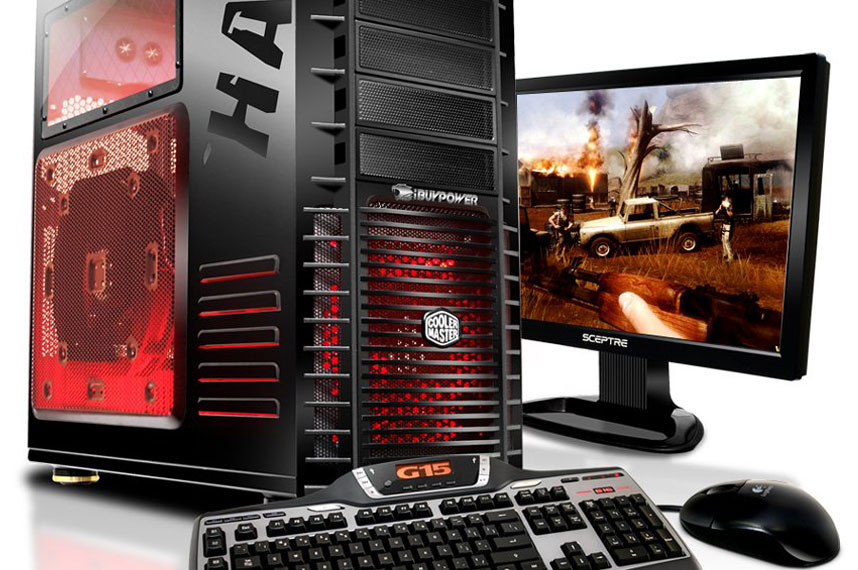
Although most people are abandoning their hefty desktop PC and embracing sleek laptops, advanced gaming is one area where the good old Desktop wins hands down with its high performance coupled with a reasonable price. PC games are the most popular software that general users ask their desktop to run and the high-end games today are designed to use several processor threads. Hence, it is significant to ensure that your gaming desktop has all the high system requirements for the exciting modern games. In the desktops meant majorly for games, the key components like the processor, a large monitor and a monitor touch screen matters a lot, as high resolutions and detailed settings enhance the game performance.
You can n through the following tips before buying the best gaming desktop:
Advantages of a large monitor in a gaming desktop:
Gaming is one area that requires extremely precise viewing to make the process more thrilling. Whether it is the virtual arrows or bullets or the blasts that is involved in the game, it is significant for you to see clearly what is going on in the monitor and what you are doing. In short, you need a monitor that looks sharp, maintains you spirited in the game and has all the characteristics that required for the modern games.
• Better Viewing
Undoubtedly, a large display screen offers a better view of the game which helps you get immersed in the high-end game without any hindrance and it can be leveraged professionally as well . While a larger display improves the overall gaming experience, the ideal size for your desktop 24 to 30 inches and a 4K ultra HD resolution monitor offers you the required pixels to enjoy a strikingly crisp display of your game images.
Advantages of a Touch Screen Monitor:
• Interesting gaming experience
The most modern games on offer are designed to work better on a monitor with touch screen facility. Instead of fumbling between the mouse and keyboard, you can select options or zoom the screen with your fingertips, which makes your game experience more interesting. There is a multitude of new genre games that are meant to play on touch screens to have a fulfilled gaming experience.
• Great Performance in Windows 8
Touch screen monitors are ideal for PCs with using Windows 8, which offers sensitive touch controls. In order to get immersed in your favorite games in its optimal level, a 3D capable monitor is ideal which facilitate the modern games.
Panel Type of the Monitor
While the vertical alignment monitors have panoramic viewing angles and better contrast ratio, the viewing angles are limited in twisted nemantic panels. Apart from these, the in-plane switching and plane to line switching monitors offer a wide angle viewing experience coupled with an uninterrupted uniform color display.
Pixel Response Rate of a monitor
The pixel response rate is of prime importance in a gaming desktop as this offers the best effect when fast moving images are involved. It is best to opt for a low response rate monitor, to enjoy your game without blurring or ghosting of images.
A large sized monitor with touchscreen effect can give you the ultimate interactive gaming experience, and it is also significant to make sure that your desktop has all the attuned ports in sync with its devices.
Types of TFT Monitors
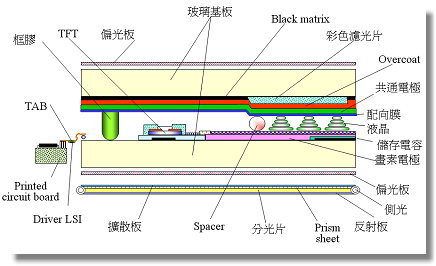
A thin- film-transistor liquid crystal display or TFT LCD is a variation of a liquid crystal display or LCD that uses thin film transistor (TFT) technology to enhance picture qualities, for example, addressability and complexity. They are especially used for gaming PC to increase extra effectiveness.
TFT monitors are of several types. Know them all.
• Twisted nematic (TN): The moderately expensive twisted nematic display is the most widely recognized buyer display type. The pixel reaction time on modern TN boards is sufficiently quick to evade from the shadow-trail and ghosting artifacts of prior production. The later utilization of RTC (Reaction Time Compensation/ Overdrive) technologies has permitted makers to altogether lessen grey to-grey (G2G) moves, without fundamentally expanding the ISO reaction time. Reaction times are currently cited in G2G figures, with 4ms and 2ms now being typical for TN-based models.
• In-Plane Switching (IPS): In-Plane Switching was created by Hitachi Ltd. in 1996 to enhance the poor survey plot and the poor color reproduction of TN boards at that time. Its name originates from the principle difference from TN boards, that the crystal molecules move parallel to the board plane rather than perpendicular to it. This change decreases the measure of light dispersing in the matrix, which gives IPS its trademark wide angle points and great color reproduction.
• Advanced Fringe Field Switching (AFFS): This is an LCD technology developed from the IPS by Boe Hydis of Korea. Known as fringe field switching (FFS) until 2003, advanced fringe field switching is a technology like IPS or S-IPS offering unrivaled performance and color spectrum with high iridescence that is best for gaming PCs. Color movement and deviation brought on by light spillage is adjusted by advancing the white gamut, which likewise improves white/grey generation.
• Multi-domain vertical alignment (MVA): It attained pixel reaction which was quick for its time, wide survey points, and high contrast at the expense of brightness and color reproduction. Cutting edge technology in the MVA boards can offer wide angle views (that are second just to S-IPS technology), great black depth, great color proliferation and depth, and quick reaction times because of the utilization of RTC (Reaction Time Compensation) technologies. When MVA boards are seen off-perpendicular, colors tend to shift, however not a greater range like that for TN panels.
• Advanced super view (ASV): Advanced super view, additionally called axially symmetric vertical alignment was created by Sharp for primarily a gaming desktop. It is a VA mode where liquid crystal molecules arrange perpendicular to the substrates in the off state. The base sub-pixel has constantly secured electrodes, while the upper one has a smaller territory anode in the core of the sub pixel. At the point when the field is on, the liquid crystal molecules begin to tilt towards the core of the sub-pixels due to the electric field; accordingly, a constant pinwheel alignment (CPA) is shaped; the azimuthal angle turns 360 degrees constantly bringing about an amazing viewing angle. The ASV mode is additionally called CPA mode.
